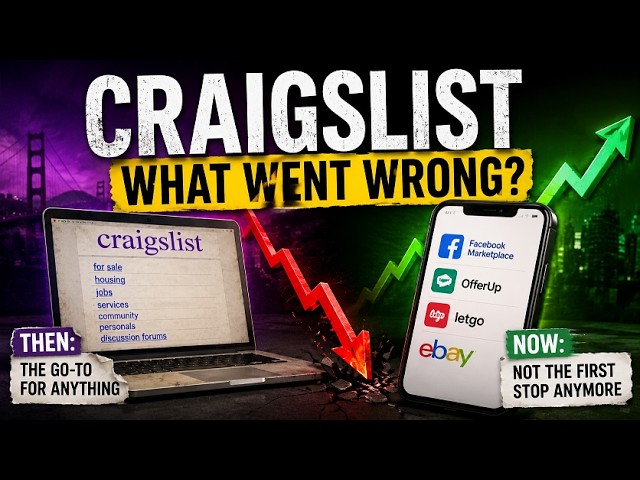
Craigslist was once one of the most influential websites on the internet, especially during the early 2000s and 2010s. At its peak, it functioned as the default digital classifieds platform for millions of people in the United States and abroad. If you needed to buy a used car, find an apartment, hire a contractor, or even look for a job, Craigslist was often the first stop. Its appeal came from its simplicity: a bare-bones design, no algorithmic feeds, no ads cluttering the experience, and extremely low or no posting fees for most categories.
Peak Craigslist: the “digital town square” era
During its strongest years, Craigslist essentially replaced newspaper classifieds. Local markets became highly liquid—meaning buyers and sellers could connect quickly without intermediaries. Housing rentals in major cities, especially, were dominated by Craigslist listings. It also became a hub for small gigs, secondhand goods, and niche community postings that didn’t fit neatly into traditional e-commerce platforms.
The company behind it, Craigslist, intentionally resisted modernization. While competitors added apps, social features, payment systems, and recommendation engines, Craigslist kept its original design and structure largely unchanged.
Why Craigslist declined
The decline of Craigslist wasn’t sudden—it was gradual and driven by several overlapping forces:
1. Competition with modern marketplaces
Platforms like Facebook Marketplace, OfferUp, Letgo (later merged), and eBay Classifieds offered more polished user experiences. These newer services added profile verification, messaging systems, images-first browsing, and mobile-first design. Craigslist’s plain text listings began to feel outdated compared to image-rich feeds.
2. Mobile-first shift
As smartphones became the primary way people browse and shop, Craigslist lagged behind. Its mobile experience was never as smooth or engaging as app-based competitors. Meanwhile, Facebook Marketplace integrated directly into an app billions already used daily.
3. Trust and safety issues
Craigslist developed a reputation—fairly or not—for scams, spam listings, and inconsistent moderation. Competing platforms invested heavily in identity verification, reporting systems, and AI-based fraud detection. Over time, users migrated toward environments they perceived as safer.
4. Loss of network effects in key categories
Craigslist’s dominance in housing and local buying weakened first. Once landlords, car sellers, and job posters shifted to other platforms, users followed. In many cities today, Craigslist is no longer the primary source for rentals or secondhand goods.
5. Lack of product evolution
Perhaps the most important factor is strategic restraint. Craigslist deliberately avoided aggressive monetization and feature expansion. While this preserved simplicity, it also meant the platform did not evolve with user expectations—especially around payments, messaging, identity, and search.
What Craigslist is today
Craigslist still exists and is heavily used in certain categories and regions, especially for niche items, local services, and budget rentals in smaller markets. However, its cultural dominance is gone. It is no longer the default starting point for most online classifieds activity.
You can still access it here: Craigslist
The bigger picture
Craigslist’s story is less about a failure and more about a platform that refused to transform itself. That choice preserved its simplicity and low overhead but allowed more adaptive competitors to take over its core functions.
In a sense, Craigslist didn’t collapse overnight—it simply stopped evolving in a space where user expectations changed rapidly. #craigslists